Crypto Liquidation Calculator
Calculate your liquidation price for leveraged crypto positions — long or short, isolated or cross margin
Price Buffer
Distance between entry and forced liquidation.
How Liquidation Works in Crypto Trading
When you trade crypto with leverage, the exchange lends you money to open a larger position. Liquidation happens when your losses approach the margin (collateral) you put up — the exchange force-closes your position to prevent further losses.
Liquidation Price Formula
Cross Margin vs Isolated Margin
Isolated margin dedicates a fixed amount of collateral to one position. If liquidated, you only lose the margin assigned to that trade. This calculator uses isolated margin by default.
Cross margin uses your entire account balance as collateral. This gives you more room before liquidation, but if liquidated, you could lose your whole account balance. With cross margin, your effective liquidation price depends on your total balance and all open positions.
Tips to Avoid Liquidation
- Use lower leverage — 5x-10x gives much more room for price movement than 50x-100x
- Always set a stop loss — Place it well before your liquidation price to exit with a controlled loss
- Use isolated margin — Limits your maximum loss to the margin for that specific position
- Monitor funding rates — High funding fees can eat into your margin over time, bringing you closer to liquidation
- Don't use 100% of your margin — Keep reserves to add margin if the market moves against you temporarily
Maintenance Margin Rates by Exchange

Binance
0.4% — 5% depending on tier

Bybit
0.5% — 5% depending on tier

OKX
0.4% — 4% depending on tier

Bitget
0.5% — 5% depending on tier
You calculated one liquidation price. What about your other positions?
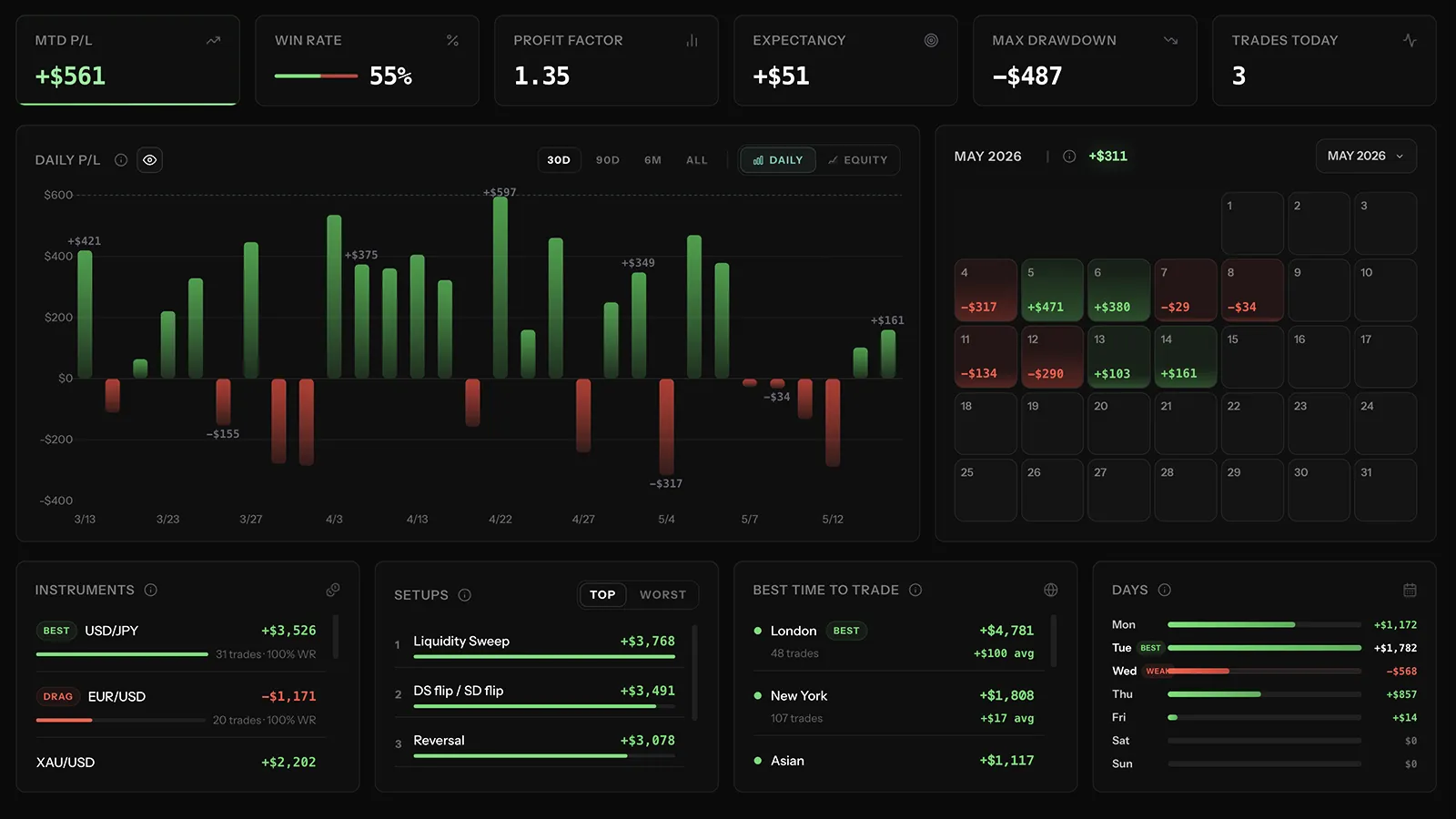
Trader's Second Brain auto-imports your leveraged trades from Binance & Bybit — tracks real P&L, margin usage, and flags when you're overleveraged across all positions.
Liquidation math is just the start
Trader's Second Brain auto-imports your trades from Binance & Bybit — then shows you which setups actually make money and which ones leak profit. All with one payment, no subscription.
Analyze your trades